
 Like many colleges, 海角社区 has seen a rise in demand for mental health services in recent years. But despite the growing need, students who are BIPOC, low-income, or first-generation often experience unique barriers to seeking help with mental health or substance use issues.聽
鈥淭wo of the gifts of our community鈥攐ur diverse student body and our location in the heart of Minneapolis鈥攎ean that a 鈥榦ne-size fits all鈥� approach to mental health doesn鈥檛 work here at Augsburg,鈥� said Michael Grewe, dean of students. 鈥淢any of our students come from immigrant communities that have experienced multiple forms of oppression and trauma, and our campus sits just a few miles from where George Floyd was murdered in 2020. This translates to a significant need not only for trauma-informed mental health services but also for a trauma-informed campus community.鈥�
Augsburg recently received a grant of nearly $300,000 from the Substance Abuse and Mental Health Services Administration to improve students鈥� ability to access culturally relevant mental health and substance use prevention and intervention services. The grant will support the Auggie Well-Being project, an initiative to promote help-seeking and reduce stigma among underrepresented and under-resourced students.聽聽
Systemic barriers to seeking help can stem from cultural stigma, fear of discrimination, past experiences of discrimination or criminalization, lack of comfort with Western mental health care systems, or lack of awareness about mental health challenges that could benefit from counseling or other interventions. The Auggie Well-being project calls for outreach, training, and community programming to address these barriers. Over the three years of the grant, Augsburg will:聽
- Educate students about mental health concepts and services through campus-wide and targeted promotion initiatives in multiple languages, including Spanish, Hmong, and Somali.
- Implement required training for faculty, staff, and student leaders on evidence-based strategies to identify and respond to mental health or substance use-related issues.
- Promote help-seeking behavior and reduce stigma through programming on culturally relevant mental health and wellness frameworks and resources.聽
鈥淥ur goal is ultimately to normalize and make it easier to ask for help, especially for our students with complex challenges,鈥� said Grewe.聽
Augsburg is one of 30 institutions nationally to receive a grant in 2024 through SAMHSA鈥檚 GLS Campus Suicide Prevention Grant Program. The program aims to support a comprehensive public health and evidence-based approach that enhances behavioral health services for all college students, including those at risk for suicide, depression, serious mental illness/serious emotional disturbances, and/or substance use disorders that can lead to school failure; prevents and reduces suicide and mental and substance use disorders; promotes help-seeking behavior and reduces stigma; and improves the identification and treatment of at-risk college students so they can successfully complete their studies. SAMHSA, a division of the U.S. Department of Health and Human Services, leads public health efforts to advance behavioral health.



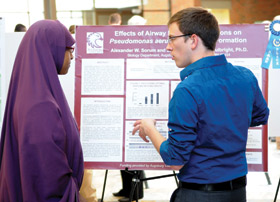 Upper-division students studying science, technology, engineering and mathematics (STEM) can apply for new academic merit scholarships for as much as $7,000 per year beginning Fall 2012.
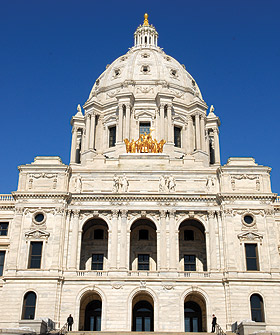 Every spring, the Minnesota Private College Council sponsors Day at the Capitol. It is an opportunity for students to meet with their legislators to advocate for the Minnesota State Grant program. This program provides critical support, helping make higher education possible for one out of three Minnesota college students from low- and middle-income families. The state invested $120 million in aid in the most recent academic year, helping more than 88,000 students.
 Recently students from the Spring 2010 Environmental Connections class, which was taught by Michael Lansing and Joe Underhill, received $500 from the Nash Foundation to fund a student-designed campus greening project. Their project deserves an A+ for creativity and could result not only in energy savings but also in improved student fitness.