More than 900 海角社区聽undergraduate students were named to the 2017 Fall聽Semester Dean鈥檚 List. The 海角社区聽Dean鈥檚 List recognizes those full-time students who have achieved a grade point average of 3.50 or higher and those part-time students who have achieved a grade point average of 3.75 or higher in a given term.
Students who wish to notify their hometown newspapers of their achievement can do so at their discretion using a聽news announcement template.
More than 100聽海角社区聽undergraduate students were named to the 2017 Summer聽Semester Dean鈥檚 List. The 海角社区聽Dean鈥檚 List recognizes those full-time students who have achieved a grade point average of 3.50 or higher and those part-time students who have achieved a grade point average of 3.75 or higher in a given term.
View the聽
Students who wish to notify their hometown newspapers of their achievement can do so at their discretion using a聽news announcement template.
Augsburg College’s $73 million, 135,000-square-foot Norman and Evangeline Hagfors Center for Science, Business, and Religion is the largest construction project underway at Twin Cities private colleges and universities. 聽included details on the project’s scope, timeline, and funding in an article that outlined summer building and renovation projects on campuses across Minnesota.
Scheduled to open in January 2018, the Hagfors Center will be Augsburg’s聽newest and largest academic building. The facility — designed by Minneapolis-based HGA Architects — features a student-centered layout聽that will foster intersections among areas of study and encourage collaboration.聽As the noted, the Hagfors Center was the focus of a successful $50 million fundraising campaign that exceeded its goal.
Comprehensive聽project milestone information is available through weekly updates on the Hagfors Center website.
More than 900 Augsburg College undergraduate students were named to the 2017 Spring Semester Dean鈥檚 List. The Augsburg College Dean鈥檚 List recognizes those full-time students who have achieved a grade point average of 3.50 or higher and those part-time students who have achieved a grade point average of 3.75 or higher in a given term.
View the聽.
Students who wish to notify their hometown newspapers of their achievement can do so at their discretion using a聽news announcement template.
Augsburg College undergraduate students were named to the 2016 Fall聽Semester Dean鈥檚 List. The Augsburg College Dean鈥檚 List recognizes those full-time students who have achieved a grade point average of 3.50 or higher and those part-time students who have achieved a grade point average of 3.75 or higher in a given term.
View the聽.
Students who wish to notify their hometown newspapers of their achievement can do so at their discretion.聽View the .
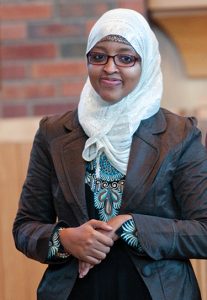
Award-winning author, columnist, and professor聽Samuel Freedman featured five Augsburg College community members in a commentary for The New York Times’ On Religion section.聽The piece, “,” highlighted the work of Muslim Student Program Associate and Chaplain Fardosa Hassan ’12.聽
As Freedman reported, Hassan is among dozens of chaplains on college and university campuses across the U.S. to “play a vital dual role: helping Muslim students feel welcome, and introducing Islam to non-Muslims.”
This work, according to Hassan, has the potential to assist students during their college days and positively influence聽individuals’聽lives long after聽graduation.
鈥淢y role is to help students negotiate this multifaith, diverse environment,鈥� Hassan explained to Freedman. 鈥淚鈥檓 going to give them a tool for when they go out of this institution, so they know how to be respectful of others. A lot of times, people are afraid even to ask the questions of people who are different. So I say, begin with friendship. Start by saying hello.鈥�
In his聽column, Freedman acknowledges that interfaith conversations are meaningful and necessary not only on Augsburg’s campus but also just beyond its borders in Minneapolis.
Augsburg “is affiliated with the Evangelical Lutheran Church in聽America and has traditionally attracted the vast majority of its students from white Protestant denominations,” he writes. “Yet its campus directly abuts the Cedar-Riverside neighborhood that is the epicenter of Minnesota鈥檚 population of 31,500 Somali Muslims. Perhaps nowhere else in the United States does a hockey rink sit so close to a halal meat market.”
While Augsburg has been a collaborative neighborhood partner for many years, President Paul Pribbenow has deepened that commitment in an effort to help the College fulfill its calling to foster conversations between聽the diverse residents of聽its vibrant community.
The story touches on interactions between Hassan and Augsburg College students whom聽Hassan has helped reflect on their spirituality聽to consider how it shapes their interpretations of the world. In this role, Hassan partners with聽College Pastor and Director of Ministries聽Sonja Hagander聽in individually supporting students as they navigate highs and lows, challenges and opportunities, faith and even their final exams.
Person-to-person efforts, according to Hassan, are at the heart聽of her聽work.
Augsburg College music therapy students created original compositions to help patients and families at the University of Minnesota Masonic Children鈥檚 Hospital get better sleep, and MinnPost recently featured the students’ collaborative endeavor.
During the 2016 spring semester, students in the Music Therapy Senior Seminar course taught by Annie Heiderscheit, director of the Master of Music Therapy program, wrote lullabies as part of a community partnership.
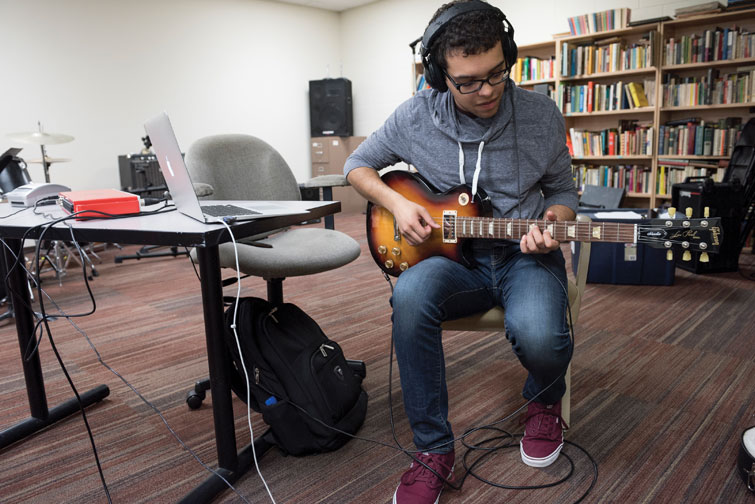
The music therapy students worked with music business students and their advisor, Augsburg Instructor , to produce high-quality recordings for use on the hospital鈥檚 network of digital, interactive health care features. Individuals can choose to play the calming tunes using devices in their hospital rooms. The Auggies鈥� compositions also are part of a pilot study that is exploring whether listening to music helps improve sleep quality in patients and families who use it in the pediatric intensive care unit.
鈥淲e had to spend time talking about how we use music for sleep and styles of music and specific elements within the music that we really need to leverage to help young patients fall asleep,” Heiderscheit explained to MinnPost.
Next the students began聽creating their original pieces, which was a complicated task, according to Estes, because the compositions聽included substantial聽tempo reductions to guide listeners into a relaxed state.
鈥淭his was an extremely difficult assignment because of how the heartbeat works,鈥� Estes said. 鈥淪tarting every song at 120 beats per minute and bringing it down to 40 beats per minute is not as easy as it sounds.鈥�
搁别补诲听“” on the MinnPost website.
[Photo]: Music therapy major Tristan Gavin’16 records a composition for use at the University of Minnesota Masonic Children’s Hospital.
The AugSTEM Scholars Program, funded through a grant from the National Science Foundation, supports students pursuing degrees in science, technology, engineering, and math (STEM). The scholars participated in Zyzzogeton, a celebration of student research.
The National Science Foundation awarded Augsburg College a highly聽competitive $1 million grant for continued support of the AugSTEM聽Scholars Program. Under the direction of Professor聽Rebekah Dupont,聽the program will provide scholarships to as many as 80 academically聽talented students with financial need who are pursuing studies in science,聽technology, engineering, and math.
The four-year grant is part of NSF鈥檚 work to address the need for a high-quality, diverse workforce. With a traditional undergraduate student body聽that is more than 35 percent persons of color, Augsburg is well positioned聽to support this goal. The program provides direct financial support, delivers聽hands-on learning, offers research opportunities, and pairs each student聽with a faculty mentor. Research shows this combination of hands-on聽learning and close mentorship is highly effective in helping students leave聽college ready for graduate school and the workplace.
Editor鈥檚 Note: This material is based upon work supported by the National Science Foundation under Grants No. 1565060 and 1154096. Any opinions, findings, and conclusions or recommendations expressed in this material are those of the author(s) and do not necessarily reflect the views of the National Science Foundation.
“You鈥檇 never expect to find a leafy arboretum in a high-density, high-diversity, high-traffic neighborhood,” says聽MinnPost writer Jay Walljasper. “But that鈥檚 exactly what Augsburg College is planning for its unmistakably urban campus in the heart of Minneapolis, which borders Fairview Riverside Medical complex, the high-rise Riverside Plaza towers, two freeways, two light rail lines, busy shopping districts on Franklin Avenue and Cedar Avenues, plus one of the largest Somali communities outside of Africa.”
Walljasper, a senior fellow for the ,聽described Augsburg’s ambitious plan to transform its campus into a living laboratory in a recent article on聽the history of the urban college, its intent to plant native Minnesota species, and聽its聽brainstorming and decision-making processes for the landscape design project.
More than聽100 Augsburg College undergraduate students were named to the 2016 Summer聽Semester Dean鈥檚 List. The Augsburg College Dean鈥檚 List recognizes those full-time students who have achieved a grade point average of 3.50 or higher and those part-time students who have achieved a grade point average of 3.75 or higher in a given term.
View the聽.
Students who wish to notify their hometown newspapers of their achievement can do so at their discretion.聽

 More than 900 海角社区聽undergraduate students were named to the 2017 Fall聽Semester Dean鈥檚 List. The 海角社区聽Dean鈥檚 List recognizes those full-time students who have achieved a grade point average of 3.50 or higher and those part-time students who have achieved a grade point average of 3.75 or higher in a given term.
 More than 100聽海角社区聽undergraduate students were named to the 2017 Summer聽Semester Dean鈥檚 List. The 海角社区聽Dean鈥檚 List recognizes those full-time students who have achieved a grade point average of 3.50 or higher and those part-time students who have achieved a grade point average of 3.75 or higher in a given term.
 Augsburg College music therapy students created original compositions to help patients and families at the University of Minnesota Masonic Children鈥檚 Hospital get better sleep, and MinnPost recently featured the students’ collaborative endeavor.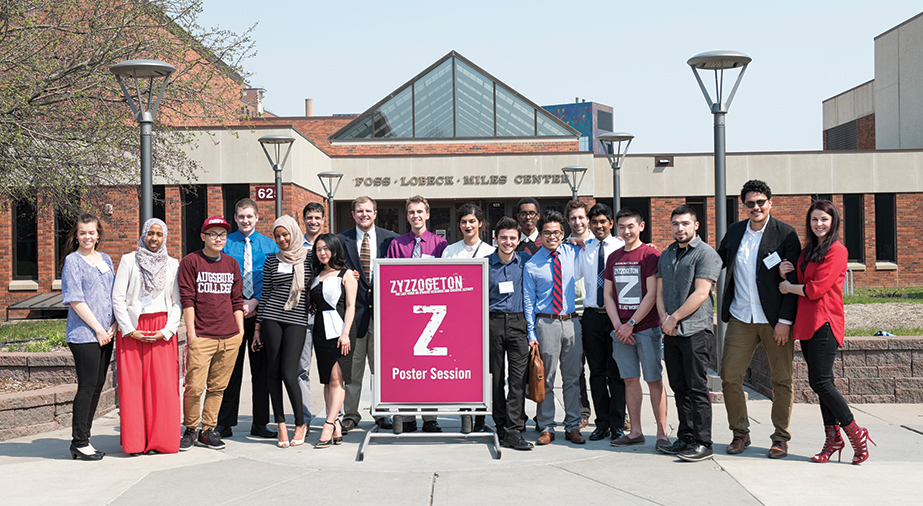
 “You鈥檇 never expect to find a leafy arboretum in a high-density, high-diversity, high-traffic neighborhood,” says聽MinnPost writer Jay Walljasper. “But that鈥檚 exactly what Augsburg College is planning for its unmistakably urban campus in the heart of Minneapolis, which borders Fairview Riverside Medical complex, the high-rise Riverside Plaza towers, two freeways, two light rail lines, busy shopping districts on Franklin Avenue and Cedar Avenues, plus one of the largest Somali communities outside of Africa.”