Augsburg College Professor of History Bill Green spoke to a crowd at the Rochester Art Center about what he learned while researching Minnesota’s history of race relations. Green is the author of the award-winning book, “Degrees of Freedom: The Origins of Civil Rights in Minnesota.”
KIMT-TV covered the event and interviewed Green, who described similarities and differences between the challenges faced by organizers of the state’s early Civil Rights movement and those involved with the contemporary Black Lives Matter movement.
The ‘ 26th聽Winter Book features poetry and prose by Heid E. Erdrich聽that explores the complex conversations between artists and viewers. Erdrich is a poet, writer, filmmaker, and mentor for students in Augsburg College’s program.
The Winter Book, 鈥渆very-blest-thing-seeing-eye,鈥� explores conversations between artists and viewers, imagining the varied experiences of viewing artworks in a gallery, according to a Pioneer Press article published before the book’s launch party.
This week, Andy Aoki, department chair of political science and Sabo fellow at Augsburg College, appeared on Political Insider, a weekly news segment on KSTP.
Aoki joined Joe Pescek, a聽Hamline Univeristy faculty member, and provided input on a variety of local and national political stories including聽President-Elect Donald Trump’s social media commentary and a potential career move for U.S.聽Rep. Keith Ellison.
Award-winning author, columnist, and professor聽Samuel Freedman featured five Augsburg College community members in a commentary for The New York Times’ On Religion section.聽The piece, “,” highlighted the work of Muslim Student Program Associate and Chaplain Fardosa Hassan ’12.聽
As Freedman reported, Hassan is among dozens of chaplains on college and university campuses across the U.S. to “play a vital dual role: helping Muslim students feel welcome, and introducing Islam to non-Muslims.”
This work, according to Hassan, has the potential to assist students during their college days and positively influence聽individuals’聽lives long after聽graduation.
鈥淢y role is to help students negotiate this multifaith, diverse environment,鈥� Hassan explained to Freedman. 鈥淚鈥檓 going to give them a tool for when they go out of this institution, so they know how to be respectful of others. A lot of times, people are afraid even to ask the questions of people who are different. So I say, begin with friendship. Start by saying hello.鈥�
In his聽column, Freedman acknowledges that interfaith conversations are meaningful and necessary not only on Augsburg’s campus but also just beyond its borders in Minneapolis.
Augsburg “is affiliated with the Evangelical Lutheran Church in聽America and has traditionally attracted the vast majority of its students from white Protestant denominations,” he writes. “Yet its campus directly abuts the Cedar-Riverside neighborhood that is the epicenter of Minnesota鈥檚 population of 31,500 Somali Muslims. Perhaps nowhere else in the United States does a hockey rink sit so close to a halal meat market.”
While Augsburg has been a collaborative neighborhood partner for many years, President Paul Pribbenow has deepened that commitment in an effort to help the College fulfill its calling to foster conversations between聽the diverse residents of聽its vibrant community.
The story touches on interactions between Hassan and Augsburg College students whom聽Hassan has helped reflect on their spirituality聽to consider how it shapes their interpretations of the world. In this role, Hassan partners with聽College Pastor and Director of Ministries聽Sonja Hagander聽in individually supporting students as they navigate highs and lows, challenges and opportunities, faith and even their final exams.
Person-to-person efforts, according to Hassan, are at the heart聽of her聽work.
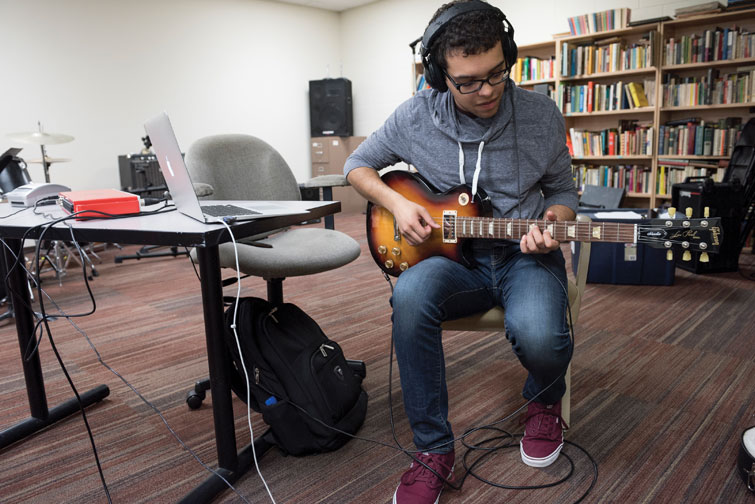
Augsburg College music therapy students created original compositions to help patients and families at the University of Minnesota Masonic Children鈥檚 Hospital get better sleep, and MinnPost recently featured the students’ collaborative endeavor.
During the 2016 spring semester, students in the Music Therapy Senior Seminar course taught by Annie Heiderscheit, director of the Master of Music Therapy program, wrote lullabies as part of a community partnership.
The music therapy students worked with music business students and their advisor, Augsburg Instructor , to produce high-quality recordings for use on the hospital鈥檚 network of digital, interactive health care features. Individuals can choose to play the calming tunes using devices in their hospital rooms. The Auggies鈥� compositions also are part of a pilot study that is exploring whether listening to music helps improve sleep quality in patients and families who use it in the pediatric intensive care unit.
鈥淲e had to spend time talking about how we use music for sleep and styles of music and specific elements within the music that we really need to leverage to help young patients fall asleep,” Heiderscheit explained to MinnPost.
Next the students began聽creating their original pieces, which was a complicated task, according to Estes, because the compositions聽included substantial聽tempo reductions to guide listeners into a relaxed state.
鈥淭his was an extremely difficult assignment because of how the heartbeat works,鈥� Estes said. 鈥淪tarting every song at 120 beats per minute and bringing it down to 40 beats per minute is not as easy as it sounds.鈥�
搁别补诲听“” on the MinnPost website.
[Photo]: Music therapy major Tristan Gavin’16 records a composition for use at the University of Minnesota Masonic Children’s Hospital.
“You鈥檇 never expect to find a leafy arboretum in a high-density, high-diversity, high-traffic neighborhood,” says聽MinnPost writer Jay Walljasper. “But that鈥檚 exactly what Augsburg College is planning for its unmistakably urban campus in the heart of Minneapolis, which borders Fairview Riverside Medical complex, the high-rise Riverside Plaza towers, two freeways, two light rail lines, busy shopping districts on Franklin Avenue and Cedar Avenues, plus one of the largest Somali communities outside of Africa.”
Walljasper, a senior fellow for the ,聽described Augsburg’s ambitious plan to transform its campus into a living laboratory in a recent article on聽the history of the urban college, its intent to plant native Minnesota species, and聽its聽brainstorming and decision-making processes for the landscape design project.
Donte Collins 鈥�18 was named the 鈥淢ost Promising Young Poet鈥� by the Academy of American Poets this fall. His poem, 鈥渨hat the dead know by heart,鈥� previously won Augsburg鈥檚 John R. Mitchell Prize, which qualified him for the prestigious award.
Collins is a theater major who is active in the local, regional, and national spoken word and poetry scene.
Collins told that he plans to use his $1,000 prize from the award to self-publish his first collection of poetry, a chapbook called 鈥渁utopsies.鈥�
President Paul Pribbenow met with leaders of the Minneapolis Star Tribune editorial board to discuss Minnesota鈥檚 educational achievement gap among children and youth of diverse backgrounds. The state has one of the largest achievement gaps in the nation, and Augsburg is working to ensure all students of academic ability have access to higher education. The College鈥檚 pledge to this work includes limited debt pathways to graduation, setting aside dedicated housing for homeless students, increasing financial aid literacy, supporting faculty in creating inclusive classrooms, and increasing access to course materials.
The College was applauded for this leadership through a compelling editorial, 鈥溾�� written and published by the Star Tribune editorial board on Aug. 30.
The editorial explained that Minnesota is rapidly diversifying, but聽increasing student diversity on college campuses involves more than waiting for more nonwhite Minnesotans to enroll. “As Augsburg College is demonstrating, academic institutions can do much to adapt their own policies and practices to educate what previously has been an underserved share of the state鈥檚 population,” the editorial explained.
Augsburg has sought to reduce barriers to college success that often impede students of color, and the College aims to not only to enroll a larger share of nonwhite students, but also to see them through to graduation.
A recent report airing on WCCO radio聽noted that as students of聽all ages returned to school this fall, 鈥淎ugsburg welcomed the class of 2020, with staff greeting students as they walked into the chapel for convocation.聽However, the class of 2020 had a special distinction 鈥� they are the most diverse class the college has seen, with more than 45 percent of them being students of color.”
As Augsburg College President Paul Pribbenow聽explained, 鈥淔or Augsburg, that means that our commitment to diversity, to inclusion and [our] commitment to justice is actually being lived out by the students who come here to be part of our community,鈥�
Associate Professor聽Lars Christiansen teaches courses in Augsburg’s Department of Sociology and Urban Studies Program. Christiansen puts his scholarship into practice as director of the Friendly Streets Initiative, a St. Paul-based organization that聽facilitates community organizing through聽creative public engagement events. The聽group aims to help communities envision positive change to public spaces, collect and analyze data, and assist聽neighbors in navigating聽city planning processes.
Christiansen described the successes of the Friendly Streets Initiative to author Jay Walljasper for a chapter of the new book, “America’s Walking Renaissance: How cities, suburbs, and towns are getting back on their feet.” Walljasper serves as a senior fellow in Augsburg’s Sabo Center for Democracy and Citizenship, and his writing explores how new ideas in urban planning, tourism, community development, sustainability, politics and culture can improve citizens’ lives.
An excerpt from “America’s Walking Renaissance” was published by MinnPost and included a photo of Darius Gray ’15, a community organizer with FSI.

 Augsburg College Professor of History Bill Green spoke to a crowd at the Rochester Art Center about what he learned while researching Minnesota’s history of race relations. Green is the author of the award-winning book, “Degrees of Freedom: The Origins of Civil Rights in Minnesota.”
 The ‘ 26th聽Winter Book features poetry and prose by Heid E. Erdrich聽that explores the complex conversations between artists and viewers. Erdrich is a poet, writer, filmmaker, and mentor for students in Augsburg College’s program.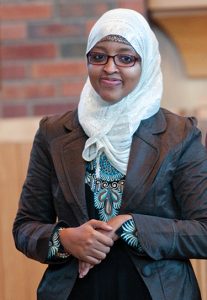
 Augsburg College music therapy students created original compositions to help patients and families at the University of Minnesota Masonic Children鈥檚 Hospital get better sleep, and MinnPost recently featured the students’ collaborative endeavor.
 “You鈥檇 never expect to find a leafy arboretum in a high-density, high-diversity, high-traffic neighborhood,” says聽MinnPost writer Jay Walljasper. “But that鈥檚 exactly what Augsburg College is planning for its unmistakably urban campus in the heart of Minneapolis, which borders Fairview Riverside Medical complex, the high-rise Riverside Plaza towers, two freeways, two light rail lines, busy shopping districts on Franklin Avenue and Cedar Avenues, plus one of the largest Somali communities outside of Africa.”
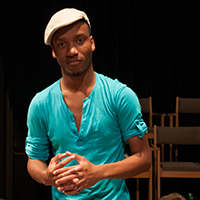 Donte Collins 鈥�18
 President Paul Pribbenow met with leaders of the Minneapolis Star Tribune editorial board to discuss Minnesota鈥檚 educational achievement gap among children and youth of diverse backgrounds. The state has one of the largest achievement gaps in the nation, and Augsburg is working to ensure all students of academic ability have access to higher education. The College鈥檚 pledge to this work includes limited debt pathways to graduation, setting aside dedicated housing for homeless students, increasing financial aid literacy, supporting faculty in creating inclusive classrooms, and increasing access to course materials.
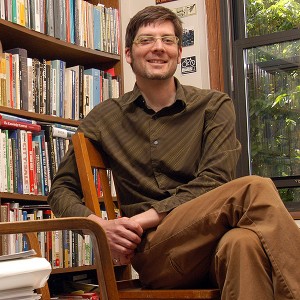 Associate Professor聽Lars Christiansen teaches courses in Augsburg’s Department of Sociology and Urban Studies Program. Christiansen puts his scholarship into practice as director of the Friendly Streets Initiative, a St. Paul-based organization that聽facilitates community organizing through聽creative public engagement events. The聽group aims to help communities envision positive change to public spaces, collect and analyze data, and assist聽neighbors in navigating聽city planning processes.