bing pixel

网曝吃瓜

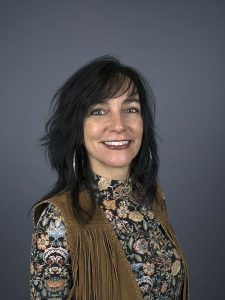
Introducing Kristina Fruge

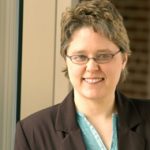
Headshot photo of Kristina Fruge
Kristina Frug

Kristina Frug茅 has worked in community and congregational contexts for over 20 years. She spent 12 years as a ministry leader in St. Louis Park, MN working as a CYF Ministry Director and Faith Community Partnership Organizer. For the past 6 years, she has worked with learning communities of local congregations as the Program Manager of the Riverside Innovation Hub at 海角社区. She also听 supports other ministry related initiatives at Augsburg in her other role as Managing Director of the Christensen Center for Vocation. She has served as a trainer with Church Innovations supporting the missional imagination of congregations.听

In all of these roles Kristina is a relationship-centered leader, utilizing skills of theological imagination, congregational and community facilitation, creative problem solving, and deep listening for the collective wisdom present in community. She has her MA from Luther Seminary in Congregational Mission and Leadership and graduated from Concordia College, Moorhead with a double major in Religion and Social Work. Her early introduction to ministry goes all the way back to being a high school confirmation guide at her home church in East Bethel, MN and four memorable summers working at Wapogasset Lutheran Bible Camp!

She believes deeply in the transformative power of the Holy Spirit that thrives when we invest in meaningful, mutual relationships. She is certain God gets really excited when these relationships get organized as a community with a shared-heart for the mutual flourishing of the neighborhood because when this happens, anything is possible.听 Her oldest of three kids, coined her vocational calling when he was a 5-year old telling her, 鈥淢om, you work for love.鈥 This orientation has continued to shape all she commits her time, energy and imagination to.听

Working for love continues to be central in Kristina鈥檚 other vocational callings with her family, friends and neighbors. She and her husband Nick have three kids, ages 16, 12, and 8 and a crazy but cuddly Vizsla named Smidge, who they love to go on adventures with – big and small, indoors and out, local and far away (when they can!) They treasure their many relationships in their Longfellow community of South Minneapolis where they have lived for over 20 years.听 They make a good effort to spend time with friends and neighbors walking, eating good food, playing and experiencing the connection they share to their place.听听

Introducing Program Director, Jeremy Myers

headshot of Jeremy Myers
Photo of Jeremy Myers, Program Director

Jeremy听has been a member of the Religion department at 海角社区 since 2006 with specific responsibilities for facilitating the University鈥檚听Theology and Public Leadership听degree program, the听听minor, and the听. He is a rostered Deacon in the Evangelical Lutheran Church in America (ELCA). You can learn more about his , or by reading his book听Liberating Youth from Adolescence.

Jeremy听has served in the field of ministry with youth and young adults professionally since 1997. He loves working with those in this chapter of life and equally loves helping faith communities become more engaged in their lives.

He believes young people today are not longing for anything different than previous generations. But the culture in which they experience these longings has grown increasingly complex and the gap between our young adults and congregations is greater than it has ever been. This gap has appeared as congregations have failed to move into this complex culture with their young people.听Jeremy听is certain congregations can learn and implement practices that move them into this complex public square where their young adults are seeking to navigate life and faith.


What do we mean by “effective” ministry?

Our research team will seek a deeper understanding of how congregations and other faith communities are effectively engaging young adults. Our hope is to learn from those who have developed effective practices, systems, and communities in order to share what they have learned with other faith communities who are seeking to improve their ministry with young adults.

Interdisciplinarity

Before we begin to define effective engagement and describe our methodology, it is important to highlight our team鈥檚 commitment to interdisciplinary studies. The life of faith cannot only be studied theologically, nor can the dynamics of a faith community or congregation. Christianity confesses belief in an incarnational God. Jesus is God鈥檚 word become flesh. God鈥檚 word lives and moves among us, in this physical world. Lutheranism confesses a belief in the Deus Absconditus or the 鈥渉idden God鈥. This is the belief in a God whose revelation is not obvious but hidden. It is the belief that God reveals Godself to humanity in, with, and under the physical realities of life. This nature of God鈥檚 revelation demands that our inquiry be interdisciplinary. 听God is to be found in the stuff of this world 鈥 nature, human community, struggles, etc. 鈥 and therefore the other disciplines shed light on the substances and phenomena in which God is present. Second, because God is hidden in these phenomena and substances, our inquiry must be theological otherwise our interpretation of the thing will be incomplete, from a theological standpoint. Therefore, in order to fully understand how communities are effectively engaging young adults in a life of faith, our inquiry must be interdisciplinary 鈥 theological and scientific (for lack of a better term right now).

Effective Engagement

We have allowed our commitment to interdisciplinary inquiry influence not only our interpretation of the data we will gather, but also our definition of important variables on the front end. 听Some Christian faith communities might consider effectiveness to mean large numbers of participants, large numbers of conversions, or assimilation to a particular lifestyle condoned by the specific faith community. Our team鈥檚 understanding of effectiveness is shaped by the following commitments, which grow from our own discipline-specific theories as well as the teaching and learning culture at 海角社区.

Our intent is not to eliminate faith communities who hold a different definition of effectiveness, but to offer other explanations for why what they are doing with young adults seems to be working and in what capacity is it (or is not) effective. A system will always behave the way the system is designed to behave, but that does not always mean the system鈥檚 effectiveness is optimal or healthy.

Therefore, effective ministry with young adults will . . .

  • Reflect an ethos, or spirit, of effectiveness indigenous to the community.
  • Take place at the intersections of faith and the arts, faith and political activism, faith and environmental stewardship, and interfaith engagement as well as other places where faith is wrapped up in active, public lives.
  • Listen deeply to their life stories in order to hear and understand the 鈥渂ad news鈥 in their lives so that 鈥済ood news鈥 might be proclaimed in word and deed. It will provide a promising alternative to a personal theory that is no longer working for them.
  • Weave together text and context in a way that results in deeper understanding of both the text and the context.
  • Learn from them, equip them, and empower them for active discipleship that is theologically aware and publicly engaged.
  • Be developmentally appropriate for those in this age category (i.e., relationships based on values, not activities; right and wrong is easier to determine at this age than in adolescence, questions and answers are more relativistic).
  • Have a strengths-based perspective that enhances the strengths that are already present in individuals and the community.
  • Produce grassroots interaction rituals, which results in 鈥渃ollective effervescence,鈥 or an intensification of collective awareness, attention, experience, emotion, and energy.
  • Clearly communicate these rituals as well as the community鈥檚 stories and values along to the participants.
  • Will balance the desire to address the needs of the individual while simultaneously addressing the needs of the larger context and the world.
  • Will demonstrate a desire and ability to adapt to new members and maintain a cohesion between its inward identity and external identity.

We assume any congregation currently engaged in effective ministry with young adults has already incorporated many of these things, whether they know it or not. Effectiveness is very contextual and we try to leave room for that, but at the same time we hold some commitments which we believe should always be present. Our working definition of effective ministry will continue to grow and change throughout this study.

MEET OUR AYTI AMBASSADORS – IAN

Meet Ian, one of our 2017-2018 Augsburg Youth Theology Institute (AYTI) year-round Ambassadors.


贬别濒濒辞!听My name is Ian Heseltine. I’m a first year at 海角社区 and am majoring in Music Business with a minor in Film.听I听 have听always enjoyed being on stage, singing, acting, and being involved in Color Guard. I can’t wait to have all of our 2018 AYTI students here at Augsburg to learn more about God, reflect on God, and serve the community through God.

More about the AYTI Ambassadors

Ian and Fidelina are working to share their experience and help connect youth and congregations with AYTI. If you are interested in learning more about the听Youth Theology Institute, or having our Ambassadors visit your congregation to share their experience, please contact us at听ayti@augsburg.edu

Christensen Vocation Lunch with “Tina” Maria Tavera

Augsburg Faculty and Staff, you are invited to attend the fall vocation lunch with “Tina” Maria Tavera, TRIO-McNair Scholars Director.

Wednesday, November 15
11:15 am – 12:20 pm

Registration has closed for this event.

More about our speaker:鈥淭INA鈥 MARIA TAVERA

Maria Cristina (鈥淭ina鈥) Tavera has been the director of Augsburg鈥檚 TRIO-McNair Scholars program since March 2008.听 Funded by the Department of Education, the McNair Scholars program helps income-eligible, first generation, and underrepresented students prepare for and matriculate to graduate school. Prior to her director role, Tavera was an Academic Advisor for Augsburg鈥檚 TRIO-Student Support Services program for four years, and听has been working for and devoted to TRIO students for over 20 years. Tavera is an artist, independent curator, and activist who has exhibited at Augsburg; she is also one of the artists selected to create a public art piece for the Hagfors Center for Science,听Business and Religion.听 She sees parallels between her artistic efforts to decrease cultural alienation and expand society鈥檚 artistic vision and her听passion for equal access to education. Her vocation is greatly听influenced by her transnational upbringing between Minnesota and Mexico, as her听scholarly research听specialization is in Latino and Latin American art.

The Christensen Vocation Lunch is an event that strengthens the concept of听vocation听at Augsburg for faculty and staff by providing role models from within the community to share a presentation on their sense of call and life journey.

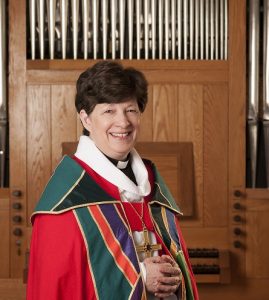
Bishop Elizabeth Eaton to speak at 2017 Christensen Symposium

Bishop Elizabeth A Eaton2017 Christensen Symposium: Address by Bishop Eaton and #decolonizeLutheranism community panel

Thursday, September 21
海角社区

Morning Event
Christensen Symposium Address by Bishop Eaton
Interfaith Friendships: How Difference Can Bring Us Together

11 a.m. – 12 p.m.

Evangelical Lutheran Church in America (ELCA) Presiding Bishop Elizabeth Eaton will speak at 海角社区鈥檚 annual Christensen Symposium Thursday, September 21. Bishop Eaton鈥檚 address, 鈥淚nterfaith Friendships: How Difference Can Bring Us Together,鈥 will explore Lutheran identity and the ongoing Reformation in the 21st century.

To mark the 500th anniversary of the Lutheran Reformation, Augsburg is hosting a series of events this fall. As the first event in this series, Bishop Eaton’s address will touch on how 鈥渋nterfaith friendships enrich learning.鈥 This theme is one of five lessons tightly connected with the work of former Augsburg President Bernard M. Christensen. Each year, the Christensen Symposium provides the opportunity to explore and apply the lessons rooted in Christensen鈥檚 legacy, which include:

  • Christian faith liberates minds and lives.
  • Diversity strengthens vital communities.
  • Interfaith friendships enrich learning.
  • The love of Christ draws us to God.
  • We are called to service in the world.

About the speaker

Elected as the ELCA鈥檚 fourth presiding bishop at the 2013 ELCA Churchwide Assembly, The Rev. Elizabeth Eaton earned a Master of Divinity degree from Harvard Divinity School and a Bachelor of Music Education from the College of Wooster. Eaton also represents the ELCA in a wide range of ecumenical and interfaith settings. She serves on the National Council of the Churches of Christ in the USA Governing Board and Development Committee, Religions for Peace USA Council of Presidents, and Lutheran World Federation Council. At gatherings, Bishop Eaton often shares her four emphases for the ELCA: We are church; We are Lutheran; We are church together; We are church for the sake of the world. These four emphases are fundamental to identifying who the Evangelical Lutheran Church in America is.

Afternoon Event
#DecolonizeLutheranism Community Panel with Bishop Eaton
2 p.m. – 3:30 p.m.

Panelists:

  • Jessica Davis, Christian Educator and #decolonizeLutheranism Chaplain
  • Rev. Lura Groen, Pastor and #decolonizeLutheranism Chaplain
  • Francisco Herrera, Ph. D candidate at LSTC and Convener of #decolonizeLutheranism
  • Rev. Angela Shannon, Dean of Student Life at Luther Seminary
  • Kelly Sherman-Conroy, Native American Theologian, Educator, Speaker, and Mentor

Through a panel presentation and conversation, Bishop Eaton will join representatives of #DecolonizeLutheranism in exploring Christensen鈥檚 second lesson, 鈥淒iversity strengthens vital communities.鈥 The #DecolonizeLutheranism grassroots movement challenges long-held patterns of white power and privilege in the ELCA and exclusivity associated with stereotypes regarding what it means to be Lutheran. This reforming movement has 11 specific goals for the ELCA.

The topic for Bishop Eaton鈥檚 address and the focus of the panel conversation speak to the rich and increasing diversity of the Augsburg community; the priorities reflected in Augsburg’s mission, vision, and values; the urban and global contexts that shape Augsburg’s vocation; and Augsburg’s deep grounding in, and vibrant relationship with, the Lutheran Church. Join us for this day of challenging conversations as together we envision what it means to be neighbor in a richly diverse world.

Please Note:

  • We regret this event was scheduled on Rosh Hashanah. Prayers for God’s blessings on Jews throughout the world during their high holy days.听
  • These sessions will be audio recorded. If you would like to be alerted as soon as the audio is available, please email ccv@augsburg.edu


500th Anniversary of the Reformation

HONORING LUTHER’S LEGACYMartin Luther

To mark the 500th anniversary of the Reformation, Augsburg is hosting a series of events this fall.


Bishop Elizabeth A Eaton Christensen Symposium: Bishop Elizabeth Eaton
September 21, 2017
Hoversten Chapel, Foss Center

This year’s Bernhard M. Christensen Symposium speaker is Reverend Elizabeth Eaton, Presiding Bishop of the Evangelical Lutheran Church in America.

Morning Event
Christensen Symposium Address by Bishop Eaton
Interfaith Friendships: How Difference Can Bring Us Together
11 a.m. – 12 p.m.

Afternoon Event
#DecolonizeLutheranism Community Panel with Bishop Eaton
2 p.m. 鈥 3:30 p.m.

Learn more about the 2017 Christensen Symposium


Heritage Day: Mary LoweMary Lowe, Associate Professor of Religion

Martin Luther on the Body, Our Bodies, and the Body of Creation

October 24, 2017
7 p.m. – 8:30 p.m.
Hoversten Chapel, Foss Center

As part of the Reformation series, Mary Lowe, associate听professor of Religion at 海角社区, will give an evening lecture followed by discussion and a reception.

Martin Luther wrote, 鈥淭here are three elements in a human, the body, the soul, and the spirit.鈥 Many of today鈥檚 complex issues involve our bodies and the body of creation: climate change, gender and sexuality, abuse, and deforestation, etc. In Augsburg鈥檚 2017 Heritage Lecture, Prof. Lowe will introduce Luther鈥檚 perspectives on bodies and creation and examine how鈥攅ven today鈥攈is theology can help us better understand and address these embodied challenges.


Fine Arts Convocation: The Rose Ensemble

November 2, 2017
11 a.m. – 12 p.m.
Hoversten Chapel, Foss Center

Award-winning musical group The Rose Ensemble will present 鈥淲elcome the People: The Musical Legacy of the Reformation.鈥

Learn More about the Fine Arts Convocation


Advent Vespers: “Welcome, Noble Guest,鈥

December 1-2, 2017

This year’s theme, “Welcome, Noble Guest,” is inspired by Martin Luther鈥檚 hymn 鈥淔rom Heaven Above.鈥

Christensen Center for Vocation鈥檚 Riverside Innovation Hub Begins Research on Ministry with Young Adults

The Riverside Innovation Hub is embarking on a 5-year journey to learn more about the relationships between congregations and young adults (ages 22-29). The first step of this journey is a research phase, and we need your help.

We are looking for Christian faith communities in the metro area (congregations, etc.) who are currently effective at engaging young adults in meaningful ways. Ministry with young adults is complicated and varied. We are open to visiting and learning from different examples – from congregations of any size, in any context and of any denomination. Our only expectation at this point is that these faith communities are currently active with young adults in significant ways.


Study congregations must commit to the following . . .

  1. A visit from an interdisciplinary team of researchers from 海角社区.
  2. Completion of a survey by your staff and participants of your young adult ministry.
  3. Interviews and/or focus groups with staff and participants of your young adult ministry.

All of these will happen during September, October or November of 2017.

Congregations must be located within a 90 minute drive of Minneapolis, MN.


Please nominate your own faith community or one you know is particularly effective in its work with young adults. The deadline for nominations is August 1, 2017. Congregations selected to participate as Study Congregations will be notified by August 15, 2017.

We are eager to learn. Please help us discover from whom we should be learning.

.


For more information contact Riverside Innovation Hub Program Manager, Kristina Fruge at frugek@augsburg.edu.

Christensen Vocation Lunch with Bill Green

SPRING 2017 – BILL GREEN

The Spring Vocation Lunch was held on March 30, 2017.

Bill Green headshotMore about our speaker:

Bill Green began working at Augsburg in 1991 as a Professor of History. Over the years, he has held several different teaching positions, including working as both an Adjunct Associate Professor of History at St. John鈥檚 University and as an Adjunct Associate Professor of Leadership, Policy, and Organization at Vanderbilt University. From 2006-2010, he served as the Superintendent of Minneapolis Public Schools. Since 2013, he has been back at Augsburg serving as a Professor of History. He regularly teaches Minnesota History, American Legal History, History of Civil Rights, History of African American Religion, 19th Century U.S. History, and History of African American Education.


The Christensen Vocation Lunch is an event that strengthens the concept of听vocation听at Augsburg for faculty and staff by providing role models from within the community to share a presentation on their sense of call and life journey.

Christensen Vocation Intern Overview

Christensen Vocation Interns intentionally explore how the concept听We are called to Service in the World听applies in a work setting.

Each spring, Augsburg students serve at faith-based nonprofit organizations for 100 hours during the semester.听They also participate in a bi-weekly seminar where they reflect on vocation readings, assessments, and work site experiences together.

The 2017 Christensen Vocation Interns served at:
鈥 Restoration Center at Central Lutheran Church, Downtown Minneapolis
鈥 Trinity Lutheran Church/Safe Place, South Minneapolis
鈥 Redeemer Lutheran Church, North Minneapolis

The Christensen Interns are selected based on strong interest in exploring vocation, call, and career interests in faith-based or service organizations, as well as potential match with the internship site鈥檚 needs.

Questions?听Contact Lonna Field at 612-330-1467 or听ccv@augsburg.edu