

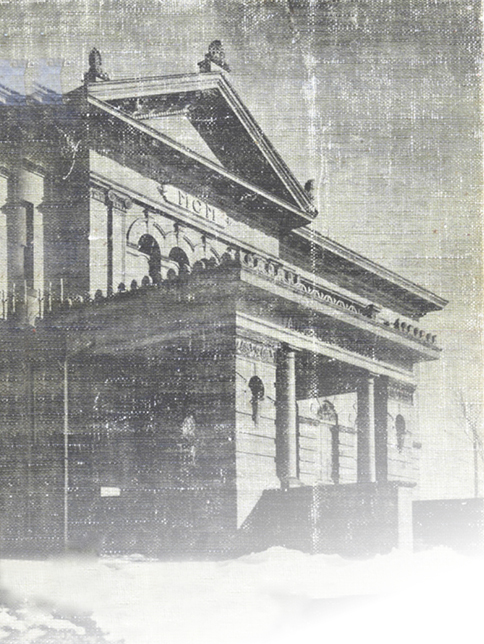
 On September 1, 鈥淎ugsburg College鈥� officially will become聽鈥満=巧缜�濃�攁 change approved by both the Board聽of Regents and the Augsburg Corporation.
For generations of Augsburg alumni and friends, it may seem like聽the place always has been called 鈥淎ugsburg College.鈥� That鈥檚 been聽the formal name of the school for the past 54 years.
Over the course of the school鈥檚 history, nearly 24,000 people聽have completed degrees at Augsburg. With so many Auggie alumni聽accustomed to thinking of Augsburg as a college, why change the name?
In short, the term 鈥渦niversity鈥� illustrates the breadth of Augsburg鈥檚聽current reality and goals for the future. And, 鈥渨hile our name is聽changing,鈥� said Augsburg President Paul C. Pribbenow, 鈥渢he essence聽of who we are is not.鈥�
As the first seminary created by Norwegian Lutherans in America,聽the name Augsburg鈥攃hosen by the school鈥檚 founders in 1869 to聽honor the Augsburg Confession鈥攁lways has defined the ethos of聽this institution and its mission to support those called to service in聽the world. Since its founding, Augsburg has been known by at least聽four different names. The name has shifted as the school has grown,聽but our commitment to an accessible, quality education has never聽wavered. Likewise, our dedication to the Lutheran principles of聽hospitality, service to the neighbor, and social justice is as steadfast聽today as ever.
In announcing the name change, Pribbenow affirmed聽that becoming 海角社区 鈥渄oes not alter our聽dedication to integrating the liberal arts and professional聽studies or our commitment to being small to our students聽and big for the world.鈥�
Rather than moving Augsburg away from its roots,聽the name change helps Augsburg remain both faithful聽to its heritage and relevant to the educational needs of聽students in the 21st century.
Ever evolving, always Augsburg
Growth聽in graduate programs
From its early years, Augsburg stressed that a good聽education is practical and focused on educating聽ministerial candidates and theological students as well as聽farmers, workers, and businesspeople.
So, it鈥檚 no surprise that Augsburg today offers聽a number of professional master鈥檚 and doctoral聽degrees 鈥� a mix of programs that makes Augsburg聽already more like a university than a college. While there聽is no fixed definition outlining the distinction between a聽鈥渃ollege鈥� and a 鈥渦niversity,鈥� offering post-baccalaureate聽degrees commonly is associated with institutions named聽as universities.
Augsburg鈥檚 first advanced degree program, the聽Master of Arts in Leadership, launched 30 years聽ago. Since then, 3,700 people have earned master鈥檚聽or doctoral degrees from Augsburg. This past fall,聽Augsburg鈥檚 graduate enrollment reached a record聽high鈥攔epresenting 28 percent of total enrollment鈥攁nd聽continued growth in Augsburg graduate programs is聽anticipated in the coming years.
Augsburg Name Change History
1869
Augsburg Seminarium
1872
The Norwegian Danish Evangelical Lutheran Augsburg Seminary
1892
Augsburg Seminary
1942
Augsburg College and Theological Seminary
1963
Augsburg College
2017
海角社区
An international perspective
Today, Auggies live and work all over the world. In many聽countries and cultures, the word 鈥渃ollege鈥� is associated聽with a high school-level education. Alumni who work聽in international settings have noted that they already聽refer to their alma mater as 鈥満=巧缜�� in聽order to avoid confusion. For the same reason, the name聽change also will help Augsburg be more attractive as a聽destination for international students, which represents a聽potential growth area for Augsburg.
A view from the outside in
With nearly 150 years of history, it鈥檚 no surprise that聽Augsburg is well known in the region鈥攅ven among聽people who haven鈥檛 (or haven鈥檛 yet) studied here. What聽impact would a name change have on their perceptions聽of Augsburg? We asked the following groups to share their聽thoughts:
- high school students,
- parents of high school students,
- high school counselors,
- people considering getting an advanced degree, and
- people who didn鈥檛 finish an undergraduate degree right after high school and are thinking about going back to school to earn a bachelor鈥檚.
These conversations generated several important聽insights, but the core takeaway is that Augsburg鈥檚 reality,聽reputation, and promise are aligned with the name change.
Our reality and reputation. Conversations with聽members of the general community demonstrated聽that people associate the word 鈥渦niversity鈥� with a聽number of attributes that clearly apply to Augsburg.聽Specifically, people view universities as having high聽academic standards, a commitment to research, strong聽international programs, and diverse student populations.
Augsburg has robust programs for scholarly research聽and global study, and is recognized nationally for its聽leadership in inclusion and equity. In many ways,聽Augsburg already embodies much of what people expect聽of a university.
The promise of a student-centered university. We also聽learned from these conversations that Augsburg has a聽strong reputation for direct student-faculty engagement.聽We already know how important this is to our alumni,聽students, faculty, and staff, but it was gratifying to hear聽that members of the broader community also value聽Augsburg as a student-centered organization.
This is something Augsburg needs to ensure does聽not change. 海角社区 will not become an聽institution marked by big campuses or large student-to-faculty ratios. Instead, as is articulated in our聽, Augsburg will be a new聽kind of student-centered university, and just as we have聽done for decades, Augsburg will remain committed to聽educating students for lives of purpose in a vibrant,聽engaged learning community.
The visual identity of 海角社区
Embracing our legacy and our future
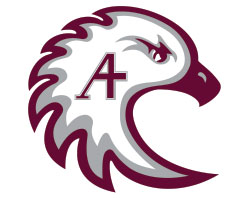
When Samuel Gross 鈥�03 was a student at Augsburg, he聽designed the original Auggie eagle-head symbol as an聽assignment for one of his graphic design courses. The design聽was so good, Augsburg ended up buying the rights to the聽image and has used the eagle symbol for campus life, student聽organizations, and athletics for the past 15 years.
During that time, Gross became an award-winning designer聽and creative director who founded his own graphic design聽firm, 144design, with a specialty in developing logos for聽clients. So, when Augsburg needed to update its logo as part聽of the transition to the 海角社区 name, it was a聽perfect opportunity to re-engage with Gross to envision and聽design the next-generation Augsburg logo.
鈥淓arly on, our conversation about the logo confirmed that聽this project should be an evolution of the Augsburg brand, not聽a revolution,鈥� Gross said. 鈥淲e wanted to preserve the strong聽recognition that has been built for Augsburg over time.
鈥淥ur goal was to preserve and respect the historic nature聽of Augsburg鈥檚 logo 鈥� especially since it already has strong聽energy and good familiarity 鈥� while at the same time creating聽a treatment that also embraces the future,鈥� he said.
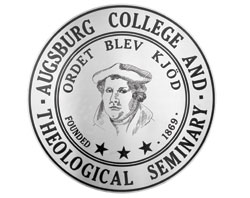
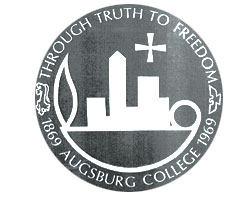
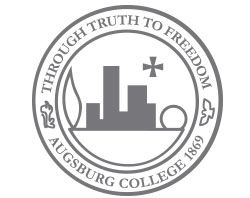
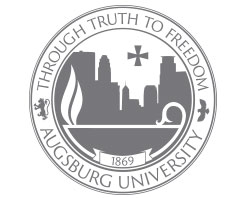
The results, including the updated Augsburg logo, 鈥淎鈥澛爄con, and eagle-head symbol are shown on the next page.聽Separately, the Augsburg seal鈥攚hich is used on transcripts,聽diplomas, and other official documents鈥攚as updated by聽Augsburg staff Mark Chamberlain and Denielle Johnson 鈥�11 and聽is shown below.
Augsburg marks: honoring the legacy
The Augsburg logo
The 海角社区 logo is designed to feel similar to people who are already familiar with the College logo, connecting the new design with Augsburg鈥檚 legacy. In the new logo, the word 鈥淎ugsburg鈥� is more bold than the word 鈥淯niversity.鈥� This approach reflects research findings indicating that people鈥檚 strong associations are with the name, 鈥淎ugsburg,鈥� whether or not it is followed by 鈥淐ollege鈥� or 鈥淯niversity.鈥�
The logo design also introduces different type treatments for the two words鈥攚ith the font for 鈥淎ugsburg鈥� conveying an established, academic feel, and the font for 鈥淯niversity鈥� providing a sleek, contemporary balance. The contrast of the two words creates a dynamic energy.
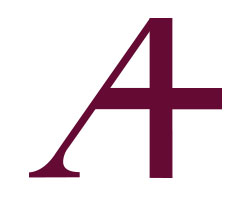
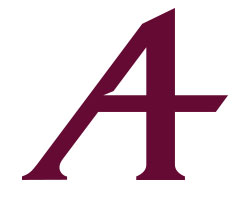
The Augsburg 鈥淎鈥�
By strengthening the design of the 鈥淎鈥� icon 鈥� broadening its base and making the vertical strokes bolder 鈥� Augsburg will be able to use the 鈥淎鈥� icon as a standalone graphic element much more frequently and effectively going forward.For example, current plans call for the 鈥淎鈥� icon to be installed on the shorter ends of the sign on top of Mortensen Hall. This is one of the most visible signs in the region and will be updated this summer as part of the transition to 鈥満=巧缜�.鈥�
The eagle-head symbol
The eagle-head symbol is stronger and bolder with this evolution. Whereas the original design lost detail
and contrast when translated to black-and-white treatments, the updated design is much more effective across a broader range of uses.
Currently, designs using the updated eagle-head symbol are under development for an array of installations鈥攆rom the Si Melby gym floor and the Edor Nelson athletic field scoreboard to the Christensen Center student lounge and merchandise sold in the Augsburg bookstore.

海角社区 seal: history and meaning
The seal conservation process began as Augsburg College explored the steps involved in changing its institutional name to 海角社区. The seal enhances an original centennial symbol design and aligns with the institution鈥檚 current reality, reputation, and promise.
You Might Also Like

Preserving Norway’s treasures
- on May 30, 2017