


If you鈥檙e interested in the history of Augsburg College, you鈥檙e probably familiar with 鈥淔rom Fjord to Freeway,鈥� a book published by long-time professor of history Carl Chrislock 鈥�37 in 1969. The publication, which tells the story of the first 100 years of the College, is receiving renewed interest and attention as we approach the institution鈥檚 sesquicentennial in 2019.
But no history is complete.
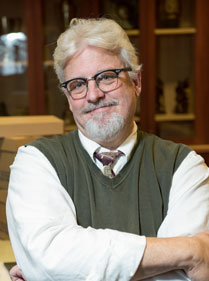 Phil Adamo, associate professor of history and director of the honors program, is authoring a new book with students to bring further aspects of the impact and personality of the College to life.
The new book, to be published during 2019, will include previously untold stories from the early years of the College. For example, the story of Augsburg鈥檚 first president, August Weenaas, and the sacrifices he made to found Augsburg is told in 鈥淔rom Fjord to Freeway.鈥� But largely unremarked upon is the story of Valborg Weenaas, his wife, who followed him from Norway to Marshall, Wisconsin. She eventually housed 10-20 students in their home, moved to Minneapolis when Augsburg did the same, and passed away in the Twin Cities at only 37.
Of course, the book also will address the events of the 50 years that have elapsed since the earlier work鈥檚 publication, such as Augsburg鈥檚 response to the 2007 collapse of the Interstate 35W bridge in Minneapolis and its aftermath. The College offered its campus facilities to and worked closely with the Red Cross, Minneapolis鈥� Emergency Preparedness Team, and the Minneapolis Police Department to set up the Family Assistance Center, a place where family members of missing victims gathered to receive news updates, talk with grief counselors, and more.
Perhaps most importantly, this new look at Augsburg鈥檚 past will strive to address the history of ideas that have shaped and been shaped by the community.
鈥淲hat I鈥檓 interested in, which is not done very often, is a history of ideas,鈥� Adamo said. 鈥淭hose ideas are wide-ranging鈥攆rom theological issues early on to evolution, which was a controversial subject in religious circles. This was new stuff when the College was founded.鈥�
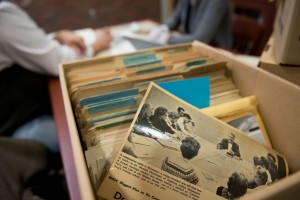 The book is a deeply collaborative effort, giving students opportunities to hone their skills in research and writing while producing a work for publication and being credited as contributors.
Students this past summer worked in the College archives with Adamo every weekday morning, and donated a portion of their hours to cataloging documents for the College archives. Caitlin Crowley听鈥�16, a transfer student and history major, documented letters from Augsburg鈥檚 fifth president, Bernhard Christensen听鈥�22, to Auggies serving in World War II.
鈥淗e was the president of the College; he must鈥檝e had a million things to do,鈥� Crowley said. 鈥淎nd yet, there are just folders and folders of personal letters he wrote. [Soldiers] would respond; he would write back. He would tell them what was happening at the College. It made me really like the guy.鈥�
Crowley鈥檚 own family history, in fact, is entwined with Augsburg鈥檚. Her mother, Deborah (Frederickson) Crowley 鈥�76, married her father on campus in the building that bears Christensen鈥檚 name. And her maternal grandfather, Jerrol Frederickson 鈥�43, attended the College for two years before joining the air force just before Pearl Harbor. However, Crowley has yet to find a letter from Christensen to her grandfather.
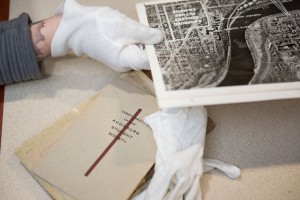 This is the third summer Adamo has worked with a group of student researchers on the project. Students in the first two summers each wrote a single, extensive chapter, but this summer鈥檚 group focused on a series of shorter vignettes. Students explored leaders including former College presidents George Sverdrup, class of 1898, and Oscar Anderson听鈥�38; Dean of Women Gerda Mortensen; coaches and athletes like Edor Nelson听鈥�38 and Devean George听鈥�99; and events such as the admission of women in the 1920s.
鈥淚t almost felt like being a journalist,鈥� Crowley said. 鈥淲e were given two topics a week. We also had to write about what was happening outside the College during the same time. It was a great way to learn about this variety of topics that I previously didn鈥檛 know anything about.鈥�
Each Friday, the students and Adamo met to read their sections aloud and critique one another鈥檚 work. 鈥淧hil could be kind of brutal, which was good,鈥� Crowley said. 鈥淓ven after just a few weeks, all of us were getting to be much better writers.鈥�
In addition to Adamo and the students working on the book, another group of historians is making use of tools Chrislock could only have imagined in 1969鈥攕martphone apps and the Internet鈥攖o share the broader history of Augsburg鈥檚 Cedar-Riverside neighborhood. Jacqui deVries, professor of history and director of general education, and Kirsten Delegard, scholar in residence in the history department and creator of the Historyapolis Project ()鈥攁n endeavor to share the first narrative history of Minneapolis in more than 40 years鈥攁re working with Anduin Wilhide, a doctoral student at the University of Minnesota, to develop a digital history tour of the area. The project will provide both a website and apps for iPhones and Android devices.
The team is now seeking funding to complete the digital upload process and to engage students in the researching and writing of additional tours. The project initially was intended to introduce new students to the neighborhood and its rich history, though, as it grew, it became clear that it will now serve a broader audience.
The goal is to have the app available as the incoming class arrives in fall 2016, offering a window into the past just as new students join the Augsburg community, ready to shape its future.
President Christensen writes to WWII soldiers
By:听Caitlin Crowley听鈥�16
During World War II, Augsburg College President Bernhard Christensen听鈥�22 diligently wrote to students and faculty stationed around the world to keep them up-to-date on happenings at home and on campus. Today in the College library鈥檚 basement, hundreds of letters between Christensen and these Auggies are archived in boxes. The correspondence tells the story of the school during the war. There are Christmas cards from Army bases and training camps, tales of life during war and life back home, well wishes and letters of recommendation for military positions and promotions, and sympathy notes to families grieving the loss of their loved ones.
Christensen was deeply invested in corresponding with all the men involved in the war, a job that must have taken countless hours of dictation and typing. He included his personal thoughts in most all of these letters. In a letter to Arthur Molvik听鈥�40, a student who later died in the war, Christensen wrote, 鈥淲e can only hope that the clouds of war will not hang over us too long and that when peace does return it will be built upon a more secure basis than formerly. Only in a faith of this kind, I believe, can we have courage to carry on.鈥�
You Might Also Like

A dark side to a boom
- on December 04, 2015
Boom or bust
- on December 04, 2015