

By Wendi Wheeler ’06
At Augsburg College, we don鈥檛 have a lot of traditions. Sure, we have Homecoming every year, and we鈥檝e marked the holiday season with Advent Vespers for the past 30 years.
But there鈥檚 no annual canceling of classes so that students can go to a local park to hear bands and eat bratwurst. President Pribbenow doesn鈥檛 trade places with a student for a day every year. And though we have some important athletic rivalries, none are so longstanding that the matchups attract fans far and wide.
There is one thing, however, that Augsburg has done quite well for a long time: we are very adept at the Lutheran Scandinavian practice of not boasting about our accomplishments.
Now, after years of celebrating achievements with an occasional internal announcement or a round of applause during daily chapel, we鈥檝e decided it is time for our practice of humility to change.
Shift in expectations
In the past, Augsburg鈥檚 tendency toward humility has kept our students from applying for national scholarships or to graduate school. But that trend is changing, thanks in part to the work of one woman鈥擠ixie Shafer.
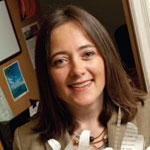
As director of Augsburg鈥檚 office of Undergraduate Research and Graduate Opportunity (URGO), Shafer gives pep talks, takes her trademark green pen to students鈥� personal statements, and shepherds them through the often daunting graduate school application process.
For a small, private college, Augsburg has an impressive r茅sum茅 of national fellowships and scholarships. In 2010 alone, four Augsburg students were awarded Fulbright scholarships, bringing the total to nine awardees in the last four years, and Augsburg was recently named to The Chronicle of Higher Education list of top Fulbright-producing schools. Five students received Gilman scholarships for the 2010-11 academic year, and in 2009 one Augsburg student became the seventh Auggie to receive a Goldwater scholarship.
And in 2008, lest we forget, Augsburg added its first Rhodes Scholar to the list of student achievements.
Shafer鈥檚 work involves helping students conduct faculty-led research during the summer and school year, advising on the graduate and professional school application process, and helping students apply for fellowships and national competitions.
In general, Shafer says she sees students who don鈥檛 believe they can be competitive at a national level. 鈥淚 rarely meet a student who thinks that,鈥� she adds. 鈥淲e have a pretty humble group of students.鈥�
But she acknowledges the slow cultural shift in expectations. 鈥淲e have more students applying for national fellowships and more receiving them, and that allows others to know that they can do it.鈥�
Not just for elite schools
Katie MacAulay 鈥�08 was one of the humble students Shafer typically meets. In her junior year, she was studying abroad in Argentina and read a story about two Augsburg students who received Fulbright fellowships.
鈥淚 had assumed it was a fellowship of the elite schools, one in which a smalltown, Midwestern girl with a relatively average r茅sum茅 would be of little competition,鈥� she says. But the article inspired MacAulay, and she made an appointment to meet with Shafer on the day she returned to Augsburg. 鈥淒ixie handed me the Fulbright information book and told me to decide whether or not I was serious about applying. As she put it, 鈥極nce you start, there鈥檚 no turning back.鈥欌��
MacAulay says her desire to apply was motivated out of curiosity to test her beliefs about Fulbrights being only for students from 鈥減restigious鈥� schools and to challenge personal feelings of inadequacy.
鈥淒ixie helped me realize that, although I maybe didn鈥檛 feel like I had the background, I certainly had the foreground.鈥�
Through the application process, MacAulay says, 鈥淚 realized that your socioeconomic status and upbringing don鈥檛 play as large of a role in defining who you are and what you become.鈥� That insight inspired her to stop feeling inadequate in comparison to others and gave her the motivation to challenge her own boundaries.
In November, MacAulay completed a 10-month grant as a Fulbright English Teaching Assistant (ETA) in Terengganu, Malaysia. She says it has been the best experience of her life and a gift that will continue to benefit her in the future.
鈥淚 am of the opinion that you can never have too many options. Be realistic about yourself, but don鈥檛 doubt your own uniqueness and abilities,鈥� MacAulay says. She encourages other Augsburg students to apply for national fellowships and programs and to challenge their own ideas about being competitive at a national level.
Educating the whole person
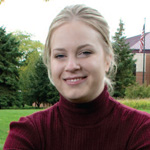
Tina (Quick) Sandy 鈥�08 is another student whose path was guided by Shafer鈥檚 counsel and by the gentle insistence of a few determined history professors. A first-generation student who says she almost didn鈥檛 come to Augsburg, Sandy is in her third year at William Mitchell College of Law in St. Paul.
At the end of her second year at Augsburg, Sandy saw a poster advertising the URGO summer research program. This program provides a stipend and housing for students who spend 200-400 hours of their summer conducting research under the supervision of a faculty member. To apply to the program, students must submit a research proposal. Sandy was reading the poster just days before the application was due.
She had been taking a history class from Michael Lansing. 鈥淗e pulled me aside one day and asked if I had considered a history major,鈥� Sandy said. So she went to Lansing about the summer program, and the two of them drafted her proposal.
That summer Sandy researched the history of the Ku Klux Klan movement in the Midwest, a project that led her specifically to document Klan activities in 1922 in Minneapolis. Throughout the entire project she worked closely with Lansing, especially on writing her final report.
鈥淗e totally changed my ability to write,鈥� Sandy says. 鈥淗is red pen shaped my experience, and it served me well.鈥� As a law student, Sandy says she feels much more confident in her writing abilities than some of her classmates who did not receive the same direction and support in their undergraduate programs.
In her third year of college, Sandy began considering her plans beyond college with the encouragement of Lansing, history professor Jacqui deVries, and political science professor Joe Underhill. Sandy was considering law school. 鈥淲e discussed her potential and then rallied the wagons to get her to think about her options,鈥� Lansing said.
He recalls that perhaps he tried to be too persuasive at times. 鈥淲e wanted to see Tina set her sights wide because we knew that she had the potential to go to any institution. We wanted to see that for her because we knew that she could really shine.鈥�
鈥淭here were a lot of opinions in my ear about what I should do,鈥� Sandy says. That鈥檚 when she went to visit Shafer. 鈥淪he threw a lot of different ideas at me 鈥� ideas that opened my mind.鈥� But Sandy says she had a 鈥済ut feeling鈥� about law school.
She wanted to stay in Minnesota to be close to her family and to her future husband, fellow Auggie Sama Sandy 鈥�08. Because the law school application process requires significant time as well as money, Sandy opted to apply to one school only, something most students are encouraged not to do.
The easy part was making the decision; the application process was another story altogether. She needed to study for the Law School Admission Test (LSAT), pass it, and submit the necessary application materials, including several letters of recommendation and a personal summary, by the deadline. This she did while taking classes, working, and trying to have something of a social life.
Sandy says Shafer was by her side through the entire experience. 鈥淪he really ended up being my encourager and sidekick.鈥� As a first-generation student, Sandy appreciated the support of someone who knew the process but also understood her own personal background.
As Tina Sandy鈥檚 story illustrates, both faculty and staff can be instrumental in a student鈥檚 success. Lansing says that as a professor, he feels that he is called to educate the whole person. 鈥淚 think that鈥檚 the point of a small college, thinking of a young person not just as a student but as a person becoming who they are. You want the very best for them.鈥�
Discovering and meeting challenges

Melissa Robertson 鈥�10 is another first-generation student who benefited from the support of faculty who saw her potential and persuaded her to go outside of her comfort zone. Their encouragement helped her meet the challenges of college and discover new opportunities.
Robertson鈥檚 first year of college presented the common challenges of balancing school work and social life. She struggled, and her grades reflected that. But in her second year she became more serious about school as she focused on the natural sciences and mathematics.
As she got to know her professors, they saw promise in her and directed her to study and research opportunities. 鈥淒ale Pederson and Matt Haines suggested I think about biostatistics, a field that would combine biology and math. I knew I would have to go to graduate school, but at that point I hadn鈥檛 even thought about it,鈥� she says.
In the summer before her junior year, Robertson participated in a short-term study program to examine the biodiversity and environmental politics of New Zealand. She also conducted research with biology professor David Crowe in the URGO summer research program.
鈥淚 was new to that type of research, but I was ready and willing to learn,鈥� she says. 鈥淒avid was a very good mentor, always willing to help and always told me when I was doing a great job.鈥�
The URGO program presented a new challenge for Robertson, who says she was shy and had extreme anxiety about giving presentations. 鈥淕iving reports about my research in front of my fellow URGO people during roundtable discussions was awful for me,鈥� she says, 鈥渁nd I didn鈥檛 even want to think about the final oral presentation.鈥�
But working with Crowe gave Robertson the confidence in herself as a scientist and a scholar. Shafer recalls the change she saw in Robertson throughout the summer and her enthusiasm about presenting her research in a graduate school interview. 鈥淭o see her go from this quiet girl who could barely talk with other students to graduate school 鈥� what an accomplishment.鈥�
Robertson continued her research with Crowe during the academic year and also began, with Shafer鈥檚 help, the process of applying to graduate school. Between school, work, and personal issues, Robertson says there were many times she wanted to give up and put off graduate school for a year. 鈥淏ut I told myself to keep on with the help of mentors, friends, family, and counseling support. I thought if I didn鈥檛 get in to any programs or didn鈥檛 like the places, at least I would have tried.鈥�
She applied to five programs, both master鈥檚 and doctoral in biostatistics and biology, and she was accepted to all five. Currently Robertson is studying on a full scholarship in the molecular biosciences program at Montana State University in Bozeman.
From first day to graduation day
There is more to student success than national scholarships and fellowships. For some students, whether they are 18 or 38 years old, the greatest achievement is simply to have arrived at Augsburg. In fall 2010, Augsburg welcomed the largest first-year class and the largest graduate school class in the College鈥檚 history.
Within this student body is the potential for many stories of students who overcame the odds to get to college and to obtain a degree. Augsburg has an impressive history of assisting students who might not otherwise be successful in college鈥� first-generation students including children of immigrant families, students in recovery from addiction, students with cognitive disabilities as well as physical disabilities, and nontraditional-aged students who are returning to college to complete a degree.
Rich Osborn is an older-than-average student who found success through Augsburg鈥檚 weekend program. At the age of 69, Osborn completed his first bachelor鈥檚 degree and was one of the oldest Augsburg for Adults students to graduate. Read his story at
Not only is Augsburg attracting a larger student body鈥攖he College is keeping students and helping them persist to graduation. Augsburg can boast an impressive 86% retention rate in the day college program from fall 2009 to fall 2010. That is an increase of 3% from last year and significantly higher than the national average of 73% for four-year private colleges and universities.
All of this success is reason for Augsburg to celebrate and to share the stories of student success. Whether it鈥檚 the announcement of another Fulbright recipient, a National Science Foundation grant, or publication in a scholarly journal, these stories serve as inspiration and motivation for other Auggies to pursue their goals.