As of fall 2025, news and media updates have been integrated with the Augsburg Now alumni publication. This site archives news stories from before September 16, 2025. Please visit augsburg.edu/now or select "Augsburg Now" from the left navigation for current news.
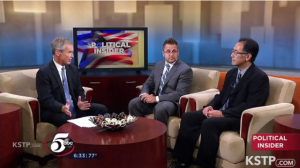
Augsburg Professor and Political Science Chair Andrew Aoki discusses United Nations, North Korea, and the Minnesota state budget on “Political Insider.”
海角社区 Professor and Political Science Chair 础苍诲谤别飞听Aoki听joined KSTP’s Tom Hauser on the weekly news segment, Political Insider to discuss President Donald J. Trump’s September address to the United Nations. Aoki also discussed local political dynamics between the Minnesota State Legislature and Governor Mark Dayton in the interview.
Builders work in Murphy Square Park to complete the “Hex House” model. Photo: Kare 11
This fall’s Nobel Peace Prize Forum showcased the innovative “Hex House,” a pop-up emergency shelter created to help respond听to refugee and natural disaster housing crises. As part of 海角社区’s continued commitment to social justice and technology, this six-sided, 510 square-foot prototype听was听constructed and on display at Murphy听Square throughout the听2017 Nobel Peace Prize听Forum. The tiny houses can be packed in a kit, shipped flat, and听assembled with听tools and instructions, much like an IKEA design.
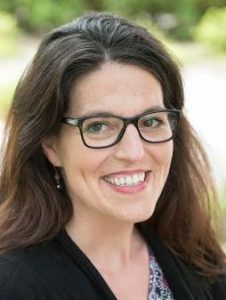
Alicia Quella, associate professor and program director of the 海角社区 Physician Assistant program.
Augsburg Associate Professor and Physician Assistant Program Director Alicia Quella has received an AAPA-PAEA Inaugural Research Fellowship. This new fellowship program is sponsored by the American Academy of Physician Assistants and the Physician Assistant Education Association. Each fellow’s institution will receive a grant of up to $25,000, which will allow recipients to focus on one of a number of research topics developed by the fellowship’s organizers. Quella听also听
More than 100听海角社区听undergraduate students were named to the 2017 Summer听Semester Dean鈥檚 List. The 海角社区听Dean鈥檚 List recognizes those full-time students who have achieved a grade point average of 3.50 or higher and those part-time students who have achieved a grade point average of 3.75 or higher in a given term.
View the听
Students who wish to notify their hometown newspapers of their achievement can do so at their discretion using a听news announcement template.
Kirsten Delegard and other Mapping Prejudice researchers talk with KARE 11 about their project.
In a conversation with KARE 11 Reporter Adrienne Broaddus,听Kirsten Delegard, 海角社区 scholar-in-residence and director of the Mapping Prejudice project, discussed the lasting impact of historically discriminatory housing policies in Minneapolis.
“People think that because we didn’t have segregated water fountains or waiting rooms that we didn’t have segregation in Minneapolis,” she said, “but racial covenants determined who could live where … We are still living with the legacy of these policies. We can point to all kinds of disparities especially in area of home ownership that we are living with today because of these polices enforced over the last century.”
The Mapping Prejudice project, once complete, will be the first comprehensive map of racial covenants for a U.S. city. 听about the project.
Bridging divisions through dialogue will be focus of leaders, experts
(MINNEAPOLIS) 鈥� The 29th annual Nobel Peace Prize Forum, an international peace congress, is September 15-16 in Minneapolis. The 2017 Forum will focus on dialogue as a bridge to cross lines of difference on a range of contentious issues, from instability in North Africa and the Middle East, to gun violence reduction and the partisan 鈥淩ed-Blue鈥� divide in the United States. The Forum will also honor the 2015 laureate, the Tunisian National Dialogue Quartet, recognized for its work toward building a pluralistic democracy in Tunisia.
PROGRAM HIGHLIGHTS:
Sept. 15
9 – 10:45 a.m. 鈥� 鈥淭he Power of Dialogue: A Conversation with the Tunisian National Dialogue Quartet.鈥� Quartet members Mohamed Fadhel Mahfoudh, Hassine Abassi and Abdesattar Ben Moussa will explain how they brought together parties in a deeply divided country to forge a new democracy in the wake of the Arab Spring.
1:45 – 3 p.m. 鈥�鈥淗ealth Care and Peace Building in Africa: Charting a Path Forward.鈥� Panelists including Barbara Bush, CEO of Global Health Corps, will discuss improving health care delivery in Africa from the perspectives of non-profit, private sector, academic and other stakeholders.
Sept. 16
11:15 a.m. – 12:30 p.m. 鈥� 鈥淕un Violence Prevention: Prospects for Progress.鈥� Former U.S. Rep. Gabby Giffords and Capt. Mark Kelly will discuss their work on efforts to reduce gun violence and the pressing aspects of that work in light of recent political changes.
7 a.m. – 6 p.m. 鈥� 鈥淐oncentric Dialogue鈥� art installations. In the spirit of fostering engagement, local and national artists have collaborated to create an outdoor exhibition of installations across the 海角社区 campus. Free and open to the public on September 16 and 17.
The 2017 Nobel Peace Prize Forum will be held at the 海角社区 campus, 2211 Riverside Ave, Minneapolis, MN 55454. Information and tickets are available at the website.
MEDIA CONTACT
Lida Poletz at lpoletz@gmail.com or 612-839-7489.
ABOUT THE NOBEL PEACE PRIZE FORUM
The Nobel Peace Prize Forum, hosted and presented by 海角社区, brings together students and community members with Nobel Peace Prize laureates, world leaders and accomplished peacemakers to work on building a world in which people can live full, rich, meaningful lives. Under the auspices of the Norwegian Nobel Institute, the Nobel Peace Prize Forum inspires peacemaking by focusing on the work of laureates and international peacemakers and peacebuilders. More at .
ABOUT AUGSBURG UNIVERSITY
海角社区 offers more than 50 undergraduate majors and nine graduate degrees to nearly 3,600 students of diverse backgrounds at its campus in the vibrant center of the Twin Cities and the Rochester site. Augsburg educates students to be informed citizens, thoughtful stewards, critical thinkers, and responsible leaders. An Augsburg education is defined by excellence in the liberal arts and professional studies, guided by the faith and values of the Lutheran church, and shaped by its urban and global settings.
Researchers in the Mapping Prejudice project review a Minneapolis map. Photo: Minnesota Daily
Under the Mapping Prejudice Project, scholars from the University of Minnesota and 海角社区 have analyzed over 1.4 million historic Minneapolis housing deeds, finding racist language in more 20,000 documents. These racial covenants forbidding the sale of property to people of color are no longer legally enforceable, but researchers hope documenting this side of the city鈥檚 history will influence urban planning in years to come.
This article describes the methods that the Mapping Prejudice researchers use to conduct their work听and discusses the motivations for the project with project director and Augsburg scholar-in-residence听Kirsten Delegard.
The research group plans to map Minneapolis by the end of 2017 and all of Hennepin County next year.
Read the full story at the Minnesota Daily News site.
University鈥檚 first-year undergraduate class more than 53 percent persons of color
(MINNEAPOLIS) — As Augsburg celebrates becoming 鈥満=巧缜�� on Sept. 5, it also welcomes an incoming first-year undergraduate class of more than 53 percent persons of color.
鈥淎s 鈥樅=巧缜�,鈥� we embrace our leadership role as a university at the forefront of intentional diversity, equity, and inclusion,鈥� said 海角社区 President Paul C. Pribbenow.
鈥淲e are proud and grateful to welcome to our community the Class of 2021, made up of students of academic ability from an array of diverse backgrounds — including ethnicity, faith, socioeconomic status, gender identity, and more. We know that learning in a diverse community prepares young people to become engaged, thoughtful citizens, and problem solvers.鈥�
The 海角社区 celebration at the Minneapolis campus includes food stations and opportunities for getting an 海角社区 logo T-shirt screen printed on-site, participating in a photo booth, assembling hygiene kits for the , which serves unsheltered persons who live in Minneapolis, and more. On Sept. 18, the 海角社区 teaching site in Rochester, Minn., will host a special ribbon-cutting to celebrate more than 20 years of providing graduate and undergraduate programs in that community.
PROGRAM and PHOTO OPPORTUNITIES
9:20 a.m.: Faculty and staff line up along 22nd Avenue South to applaud students as they process into Hoversten Chapel, Foss Center, for the Opening Convocation.
9:30 a.m.: Opening Convocation in Hoversten
10:30 a.m.: Kick-Off Celebration and Lunch in the Quadrangle
11:30 a.m.: 听海角社区 President Paul Pribbenow formally launches 海角社区
12:30 – 1 p.m.: First-Year Students Begin Service Projects
ADDITIONAL FACTS
Augsburg measures diversity beyond ethnicity and culture and welcomes persons in our community of diverse faiths, gender identities, socioeconomic backgrounds, learning styles, and military commitments. Nearly 10 percent of students self-identify as Muslim. More than 11 percent self-identify as LGBTQIA.
On Sept. 5, the Class of 2021 will donate nearly $35,000 in service work at more than 20 locations in Minneapolis.
ABOUT AUGSBURG UNIVERSITY
海角社区 offers more than 50 undergraduate majors and nine graduate degrees to nearly 3,600 students of diverse backgrounds at its campus in the vibrant center of the Twin Cities and the Rochester site. Augsburg educates students to be informed citizens, thoughtful stewards, critical thinkers, and responsible leaders. An Augsburg education is defined by excellence in the liberal arts and professional studies, guided by the faith and values of the Lutheran church, and shaped by its urban and global settings.
Screen shot of a time-progression map showing the growth of racially restrictive real estate covenants in the early 20th century.
Augsburg President Paul Pribbenow talks with the Star Tribune’s Randy Furst about how the Augsburg House — and much of South Minneapolis — were once governed by discriminatory housing policies. While the historical covenants are no longer legally binding, Augsburg is seeking a method to nullify the prohibition while still preserving the historical record, “so that we never lose sight of the actions that have segregated and repressed many,” Pribbenow said.
The findings about residential properties in South Minneapolis are part of the Mapping Prejudice project, led by a team of researchers from Augsburg and the University of Minnesota. For more information about the project, see . Go to the for information about other South Minneapolis homes, a perspective from a Minneapolis real estate lawyer, and an interactive map showing the growth of racially restrictive deeds across Minneapolis from 1910 to 1955.
The Midway at the Minnesota State Fair. Photo: Tom Wallace, Star Tribune
The Star Tribune’s John Reinan talks with Augsburg Psychology Professor Bridget Robinson-Riegler about how the Great Minnesota Get-Together听“not only entertains us, excites us and exhausts us 鈥� it makes us Minnesotans.”
鈥淥ur identity is formed by our memories. Traditions and rituals are very important in identifying who we are,鈥� said Robinson-Riegler, who specializes in the study of memory. 鈥淔amilies are based on shared experiences, and this is one of those shared experiences we have as a state. The State Fair becomes a collective experience. It gives us a sense of belonging, of togetherness.
鈥淭his is what we do as a state. It confirms our identity. It becomes who we are.鈥�


 More than 100听海角社区听undergraduate students were named to the 2017 Summer听Semester Dean鈥檚 List. The 海角社区听Dean鈥檚 List recognizes those full-time students who have achieved a grade point average of 3.50 or higher and those part-time students who have achieved a grade point average of 3.75 or higher in a given term.