
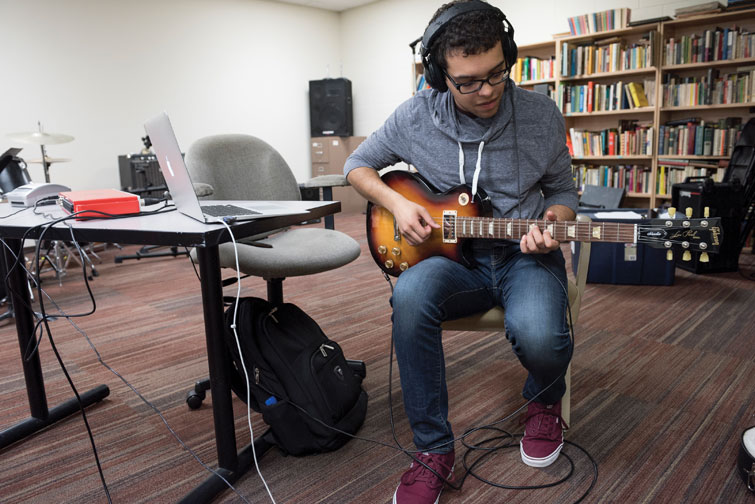
 Augsburg College music therapy students created original compositions to help patients and families at the University of Minnesota Masonic Children鈥檚 Hospital get better sleep, and MinnPost recently featured the students’ collaborative endeavor.
During the 2016 spring semester, students in the Music Therapy Senior Seminar course taught by Annie Heiderscheit, director of the Master of Music Therapy program, wrote lullabies as part of a community partnership.
The music therapy students worked with music business students and their advisor, Augsburg Instructor , to produce high-quality recordings for use on the hospital鈥檚 network of digital, interactive health care features. Individuals can choose to play the calming tunes using devices in their hospital rooms. The Auggies鈥� compositions also are part of a pilot study that is exploring whether listening to music helps improve sleep quality in patients and families who use it in the pediatric intensive care unit.
鈥淲e had to spend time talking about how we use music for sleep and styles of music and specific elements within the music that we really need to leverage to help young patients fall asleep,” Heiderscheit explained to MinnPost.
Next the students began聽creating their original pieces, which was a complicated task, according to Estes, because the compositions聽included substantial聽tempo reductions to guide listeners into a relaxed state.
鈥淭his was an extremely difficult assignment because of how the heartbeat works,鈥� Estes said. 鈥淪tarting every song at 120 beats per minute and bringing it down to 40 beats per minute is not as easy as it sounds.鈥�
搁别补诲听“” on the MinnPost website.
[Photo]: Music therapy major Tristan Gavin’16 records a composition for use at the University of Minnesota Masonic Children’s Hospital.
 “You鈥檇 never expect to find a leafy arboretum in a high-density, high-diversity, high-traffic neighborhood,” says聽MinnPost writer Jay Walljasper. “But that鈥檚 exactly what Augsburg College is planning for its unmistakably urban campus in the heart of Minneapolis, which borders Fairview Riverside Medical complex, the high-rise Riverside Plaza towers, two freeways, two light rail lines, busy shopping districts on Franklin Avenue and Cedar Avenues, plus one of the largest Somali communities outside of Africa.”
 President Paul Pribbenow met with leaders of the Minneapolis Star Tribune editorial board to discuss Minnesota鈥檚 educational achievement gap among children and youth of diverse backgrounds. The state has one of the largest achievement gaps in the nation, and Augsburg is working to ensure all students of academic ability have access to higher education. The College鈥檚 pledge to this work includes limited debt pathways to graduation, setting aside dedicated housing for homeless students, increasing financial aid literacy, supporting faculty in creating inclusive classrooms, and increasing access to course materials.
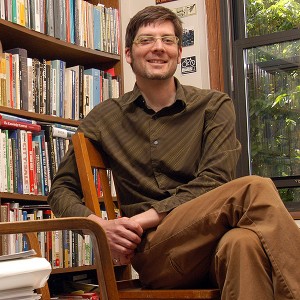 Associate Professor聽Lars Christiansen teaches courses in Augsburg’s Department of Sociology and Urban Studies Program. Christiansen puts his scholarship into practice as director of the Friendly Streets Initiative, a St. Paul-based organization that聽facilitates community organizing through聽creative public engagement events. The聽group aims to help communities envision positive change to public spaces, collect and analyze data, and assist聽neighbors in navigating聽city planning processes.
 A recent report airing on KARE 11 television noted that, “Augsburg College is located in the heart of Minneapolis in one of the most diverse zip codes in the city.” And, the College’s graduating class reflects that diversity.